

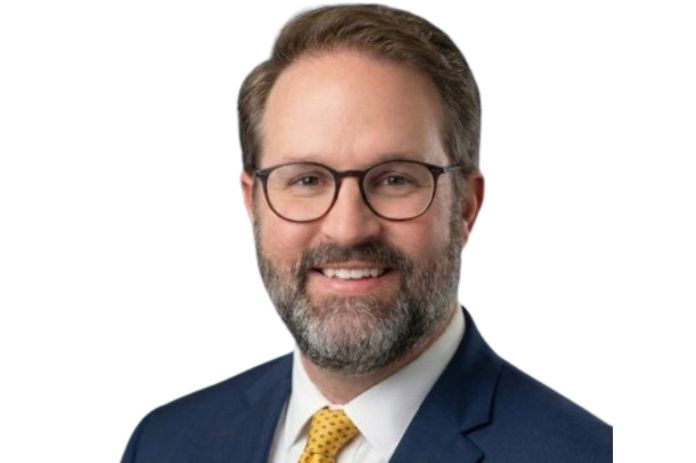
Jason Morris, NACD.DC
Member Spotlight
Professional Title
Chief Financial Officer, Fireproof Contractors
What’s one thing you’re learning right now — professionally or personally?
Professionally, I am deep-diving into the enterprise governance of artificial intelligence. Specifically, I am focused on how to transition AI from a fragmented "shadow IT" problem into a secure, closed-loop Model Context Protocol (MCP) architecture that scales our operational capacity without compromising proprietary company data.
In your view, what makes a truly effective board member?
The ability to translate between boardroom strategy and shop-floor reality. An effective director doesn't just read the financial reports and check compliance boxes; they interrogate the operational friction behind the numbers and help the executive team architect resilient, downside-protected growth.
Beach, mountains, city, or countryside — what’s your ideal getaway?
Definitely the countryside. Having grown up on a family farming operation in South Texas, I appreciate the quiet and the grounded, unvarnished reality it brings after a week of managing corporate chaos.
What’s a small daily habit that makes a big difference for you?
My early morning commute. I have an hour-long drive to the office, and I use that uninterrupted quiet time in the truck to pressure-test my strategy for the day before the operational reality of the business takes over.
What’s a book every board member should read?
Boyd by Robert Coram. It is an absolute masterclass on what it means to lead effectively within a highly bureaucratic environment. The core thesis—the distinction between choosing "to be" (focusing on advancement, titles, and political safety) versus "to do" (focusing on doing the actual work and driving impact)—is a critical lesson for corporate governance. It serves as a stark reminder that a board member's ultimate priority must always be the integrity of the work itself, rather than comfortably navigating the political red tape of the boardroom.
What's the best piece of advice you've ever received?
"Your gut shouldn't make the final decision, but it should tell you exactly where to start digging." It’s a lesson I learned early in my career while reviewing commercial real estate assets. Consensus often hides structural cracks, and as a leader, you have to be willing to interrogate the data when it doesn't align with operational reality.
In your experience, what differentiates great board chairs?
Great chairs strip themselves of the "Main Character" status. They understand that their role isn't to drive the conversation or dictate the outcome, but to protect the integrity of the debate. They ask for the ugly truth first and ensure that independent judgment isn't overshadowed by dominant personalities in the room.
If you had an extra free hour every day, how would you spend it?
I’d dedicate it to completely unstructured, "offline" strategic thinking. In an environment driven by constant data generation and immediate execution, having an insulated hour to simply reflect, run scenario analyses, and look over the horizon is an invaluable asset for capital allocation.
What’s the most unforgettable trip or experience you’ve ever had?
Walking a 1,250-pound Limousin steer onto the floor of the Houston Astrodome as a kid in 1993 and walking out as the Reserve Breed Champion. A sudden "slick shearing" rule change had disrupted the entire show circuit that year, and it was my first real lesson in how quickly you have to pivot, adapt, and trust your foundation when the market fundamentally shifts.